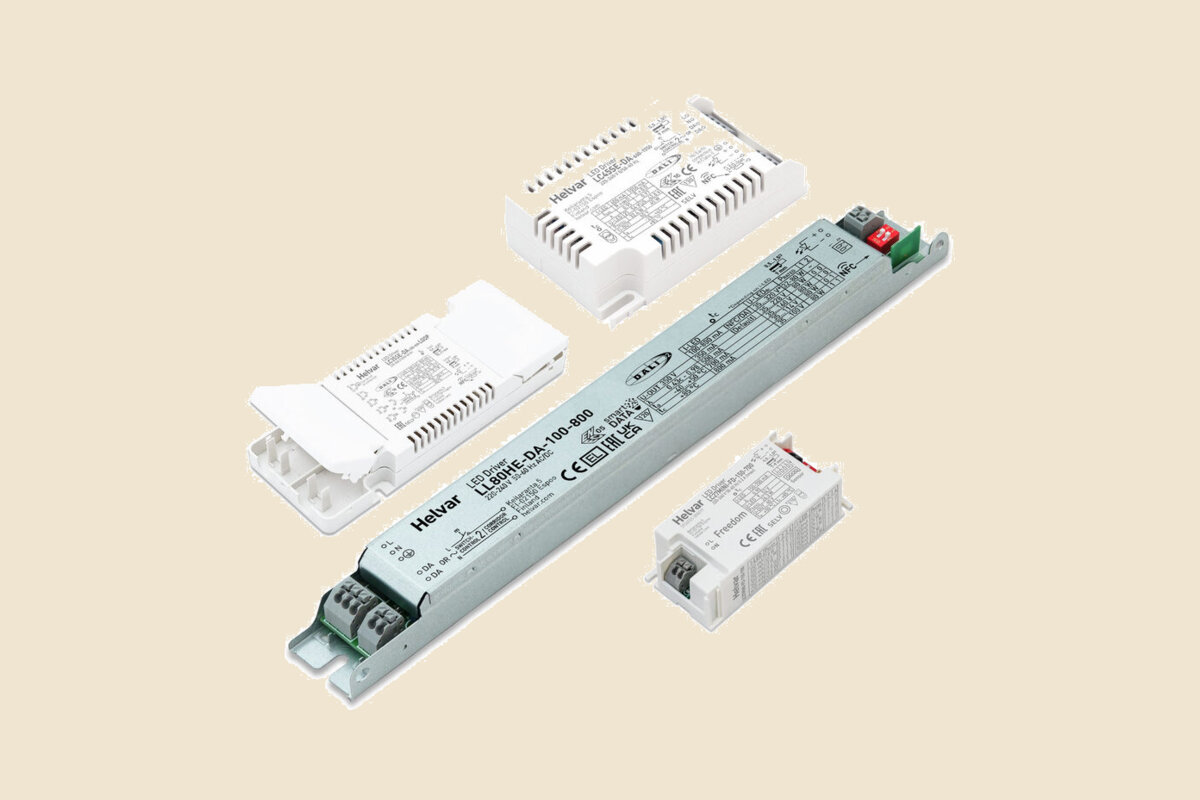
When an LED fitting dies early, the housing is rarely the problem. It is usually a component: a driver running too hot, LEDs pushed past what the heat path can take, an optic that does not suit the room. Those parts are chosen before the luminaire is built, and that is where we put most of our attention.
The trouble with specifying from a catalogue
A catalogue line says what a fitting does under the manufacturer's test conditions. Your ceiling void is not those conditions. A driver happy at 25 °C ambient is a different proposition above a Dubai ceiling in August, or in a sealed fitting on a rooftop where the air around it can pass 50 °C. Two luminaires with the same wattage and lumen figure on paper can behave very differently after two summers here, and the difference is almost always inside.
What we look at, part by part
- Drivers. The ambient range and the maximum temperature at the tc point, not just the output power. Dimming range and protocol, efficiency, power factor, and whether the driver is approved for DC input if the circuit is on central emergency.
- LEDs and COBs. Colour consistency across a batch, CRI, and R9 where reds matter (retail, food, skin). We work across the full CRI range, including R9-optimised and tunable white sources.
- Optics. Chosen for the beam the room needs, from narrow 5° spots to 120° wide distributions, plus glare control where people look up.
- Thermal. Heatsink material and mass, the interface between board and body, and thermal simulation when a design is new.
Reading a driver datasheet properly
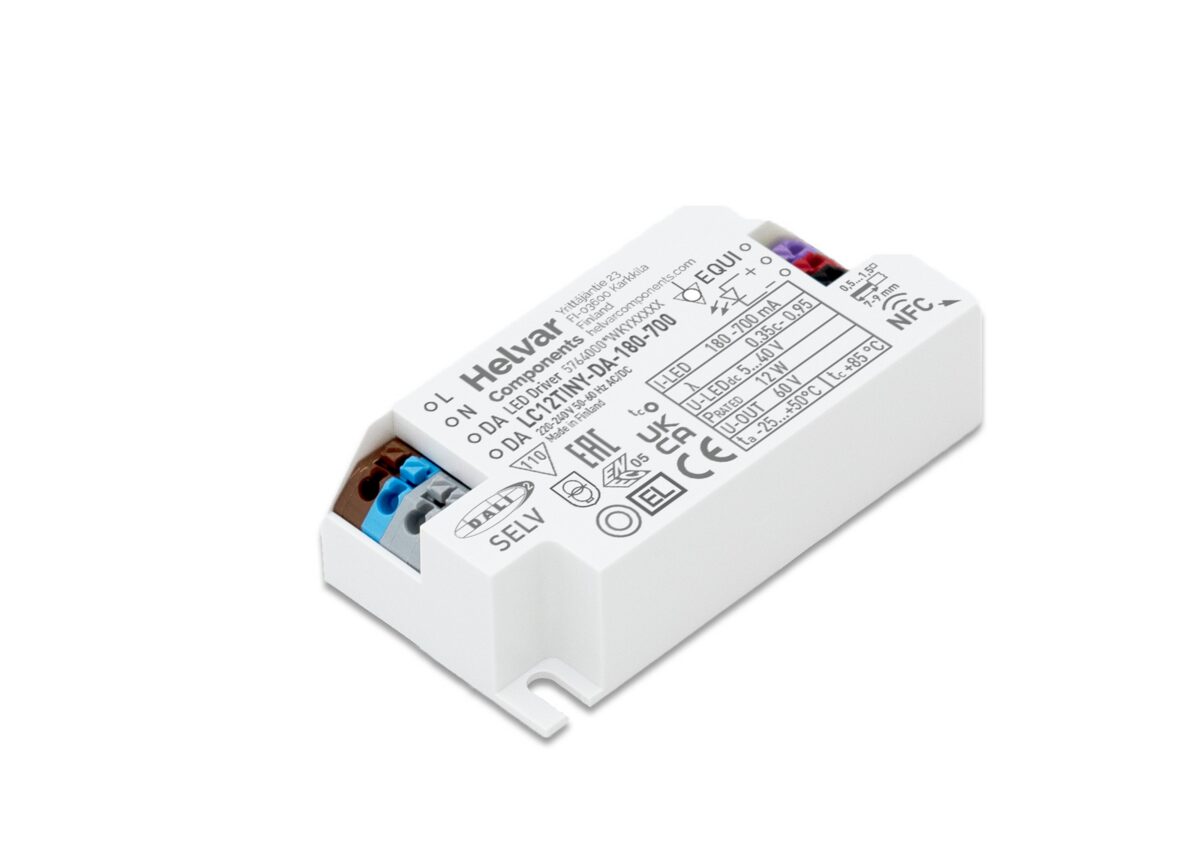
Take the Helvar LC12TINY-DA-180-700 as an example. Its datasheet gives an ambient range of -25 °C to +50 °C and a maximum tc point temperature of 85 °C, lifetime up to 100,000 hours, efficiency up to 88 %, a power factor of 0.95 at full load, DALI-2 dimming from 1 % to 100 %, and approval for DC input in emergency lighting. The lifetime figure only holds if the tc point stays within limit in the actual fitting, in the actual ceiling. That is the check that gets skipped when a driver is picked from a price list.
How it shows up in our own luminaires
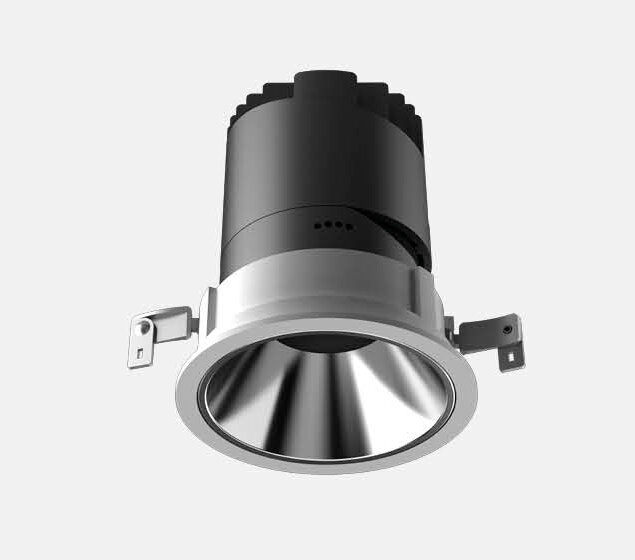
Our ALENA downlight is a good example of the approach. The reflector is designed for UGR < 16 with a honeycomb option, the heatsink is die-cast aluminium, and the control gear is Helvar. Each of those is a component decision made for a reason, and together they decide how the light looks and how long it lasts.
Where to start
Whether you are building fittings or specifying them, it is worth asking for the component list and the thermal data along with the photometry. Our services page sets out how we source and test components for OEM work, and the components showcase shows the ranges we carry. If you have a fitting you are unsure about, send us the details and we will look at what is inside.