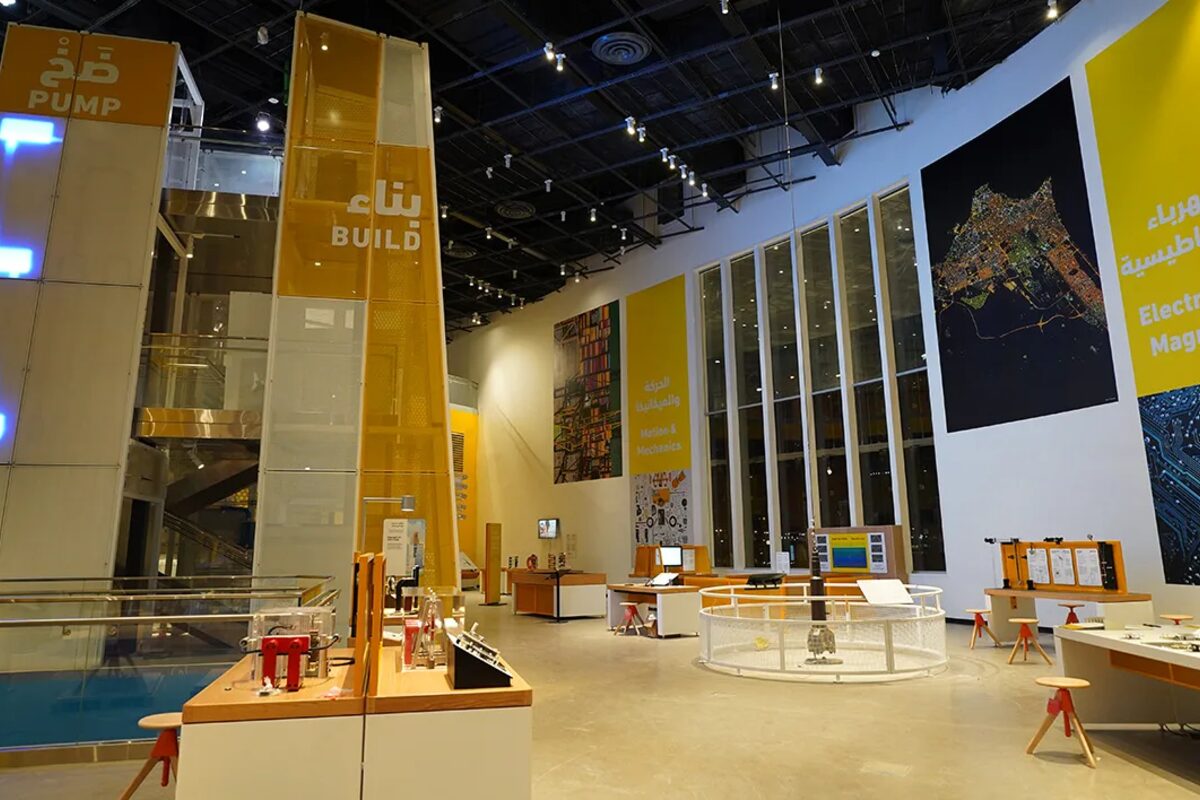
Luxtron supplied 230 V track systems for The Scientific Centre in Kuwait (TSCK). It heads the list of museum projects on our projects showcase, and the photos show why: gallery after gallery of black ceiling, dense with track and spotlights, over bright, hands-on exhibits.
A science centre is a different animal from an art gallery. The exhibits are tables, models, screens and interactive stations, the walls are painted in strong colours, and the visitors are often children moving fast. The lighting has to make all of that legible without turning the room into a flat, bright box.
What we supplied
Our scope was the 230 V track systems. The project sits with the jobs where we supplied lighting components, in this case the track that carries the gallery spotlights.
Black ceilings, lots of track
In almost every photo the ceiling is black and open, with long parallel runs of black track. That combination does two things. The ceiling visually disappears, so attention drops to the exhibits. And the track grid gives the exhibition team a fixture position almost anywhere in the room.
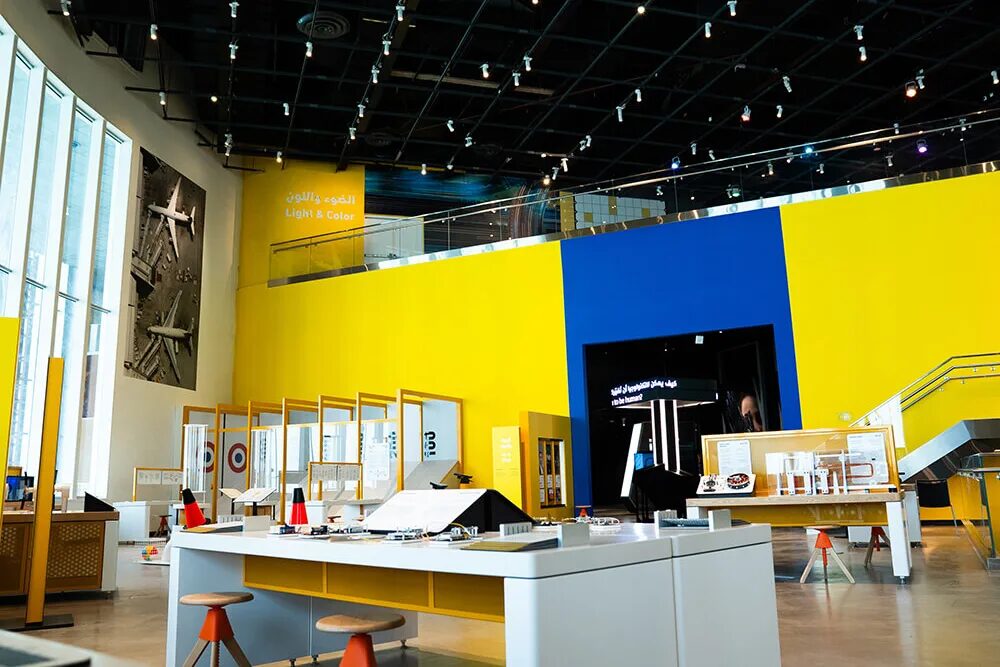
That flexibility matters in a science centre. Exhibits get refreshed, tables move, a new interactive arrives. With track, the lighting moves with them.
Lighting tables, models and screens
The galleries mix very different things side by side, and each wants something different from the light:
- Exhibit tables and models, like the large city model in one gallery, need even light across a horizontal surface without hot spots. Several spots from different directions do better than one.
- Screens and projections want darkness around them. Spots near a screen should be aimed away from it.
- Graphics and signage on the walls need enough vertical light to read, especially bilingual panels with small Arabic and English text.
- Circulation needs a safe, comfortable level on the floor, even in the darker galleries.
Colour and mood by gallery
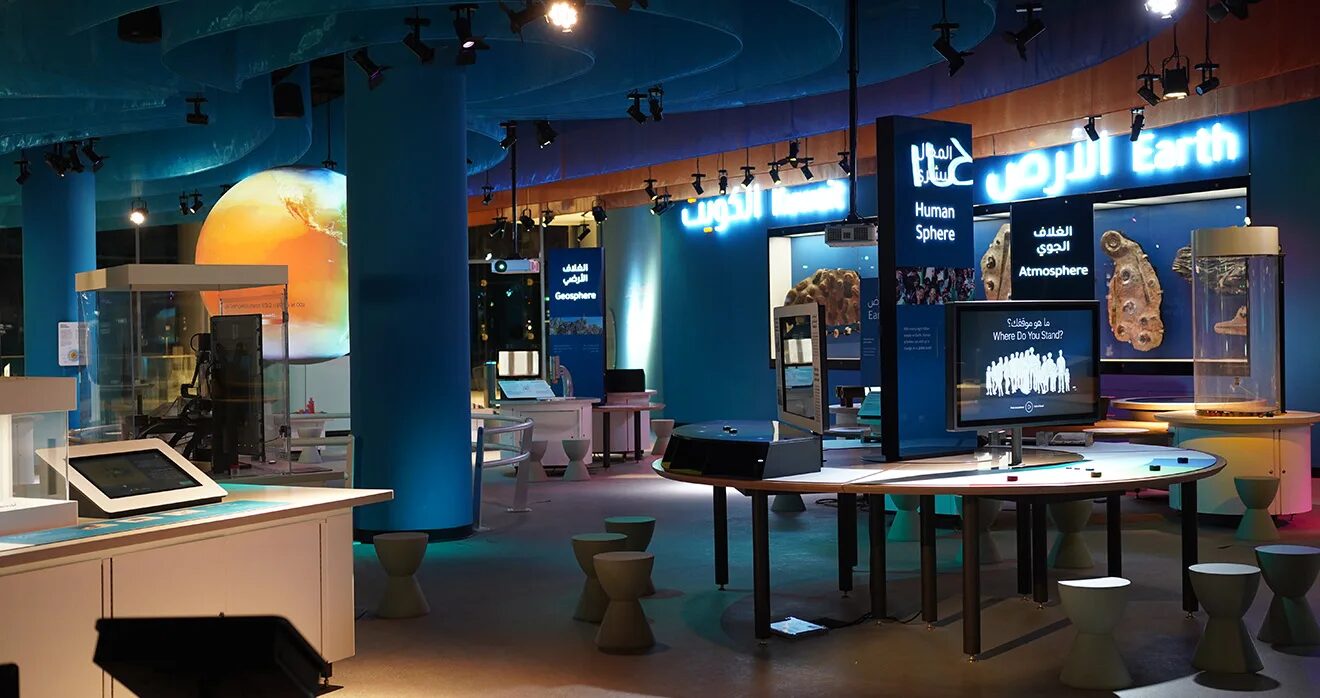
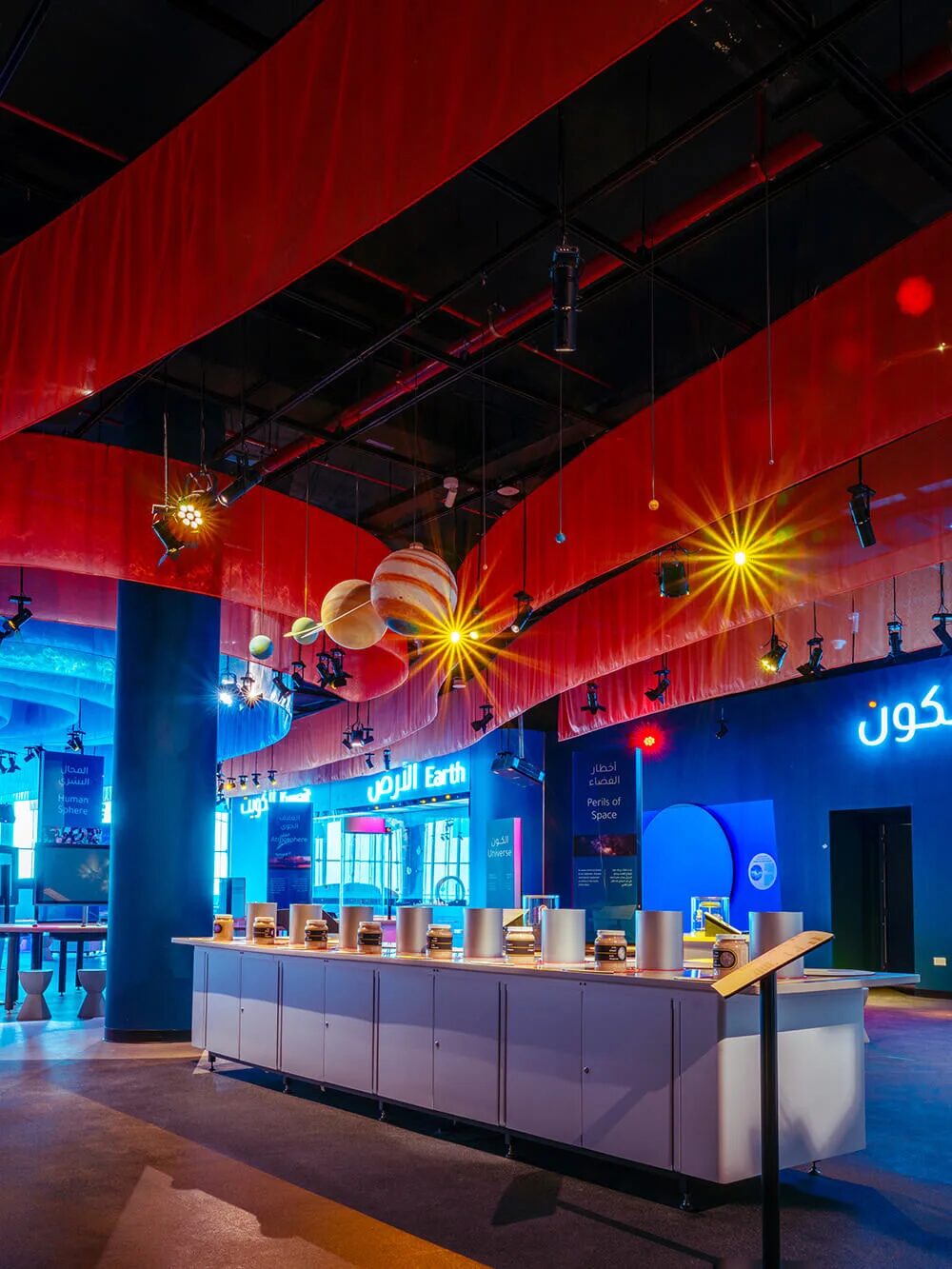
Each gallery has its own palette: yellow and blue in one, deep blue and orange in another, red drapes and suspended planets in a third. Track spotlights let the curators light those themes as they want, with tight beams on the hanging models and softer pools across the floor.
The same approach runs through the other museum projects on our list, from the Grand Egyptian Museum in Giza to the Creation Story Museum in Saudi Arabia, both on 230 V track. Different collections, the same need for light that can move.
Next step
Working on a museum, science centre or visitor attraction? Tell us how often the exhibits change and we will suggest a track layout that keeps up. See our track systems, such as the ONETRACK 3~ high track, or get in touch.