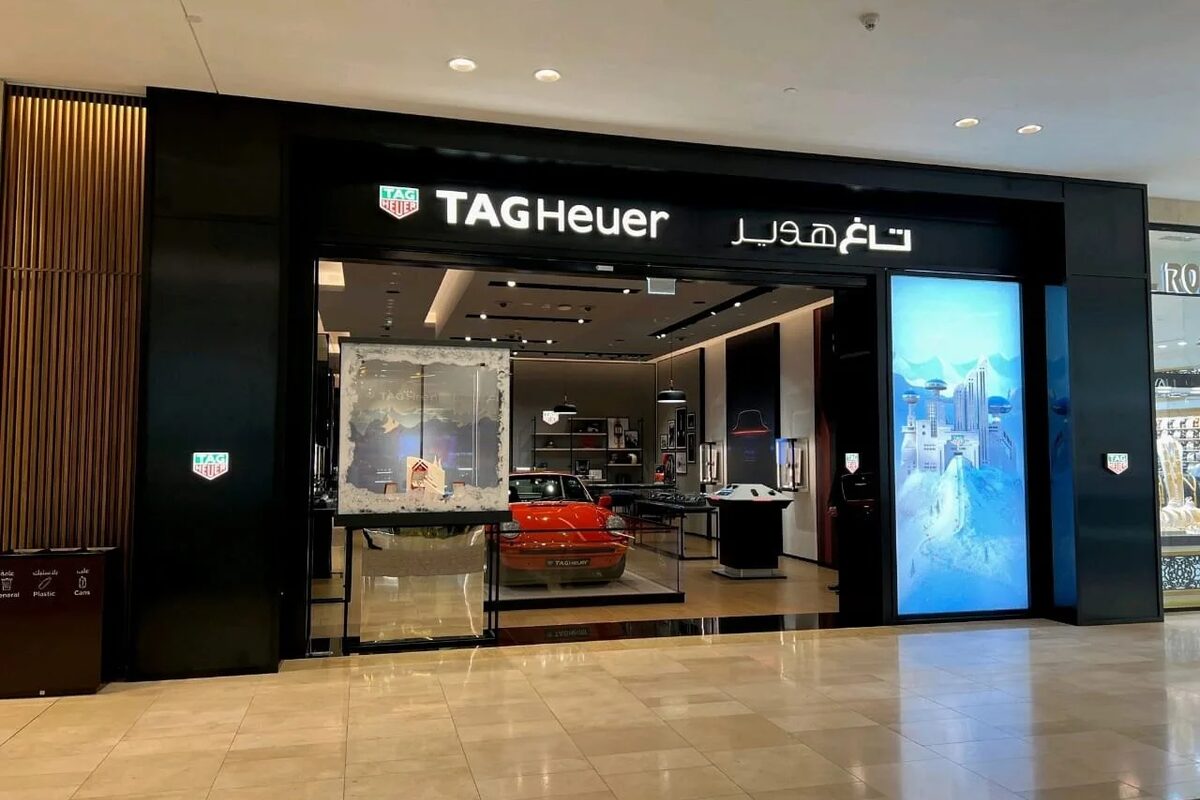
Good retail lighting does one job: it makes people look at the product, and then makes the product look right when they do. Everything else, from fixture choice to controls, follows from that. This guide covers the decisions that matter most when lighting a shop, with examples from projects on our projects showcase.
Build it in layers
A shop lit only by evenly spaced downlights looks like a warehouse. Most good stores use three layers:
- Ambient light to let people move around and read labels. It can be lower than you expect, because contrast is what draws the eye.
- Accent light on the products, displays and feature walls, usually several times brighter than the surrounding ambient light.
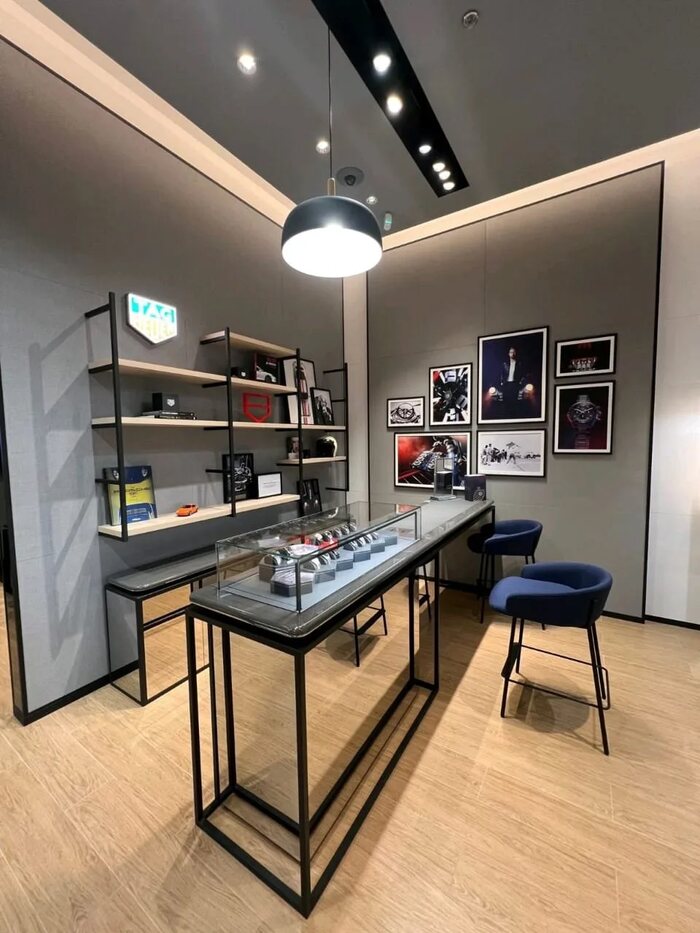
- Vertical light on walls and shelving. Customers see walls before floors, and a lit back wall pulls them into the store.
Display cases and counters add a fourth layer, lighting inside the case, which needs its own small, cool-running spots.
Colour quality is part of the product
Fabric, leather, food, cosmetics and metal are all sold on colour. CRI 90 should be the default for retail, with higher values where colour is critical. Watch R9 (saturated red) as well: low R9 makes skin, red fabric and wood look dull even when the headline CRI is fine.
Colour temperature sets the mood. Warm white (2700 K to 3000 K) suits fashion, jewellery in gold and hospitality-style stores. Neutral white (3500 K to 4000 K) suits technology, sports and stores with a lot of white or silver. Keep one colour temperature per zone unless the contrast is deliberate.
Control glare
Accent lighting means bright sources pointed at things, and that can easily mean bright sources pointed at people. Use deep-set or low UGR fittings for the ambient layer, honeycombs or snoots on accent spots that face the entrance, and avoid aiming spots straight down onto glossy floors and glass, where the reflection is as bright as the source. Luxtron's JONNY downlight was designed for this: high output for retail without giving up colour quality or comfort.
Use track where displays change
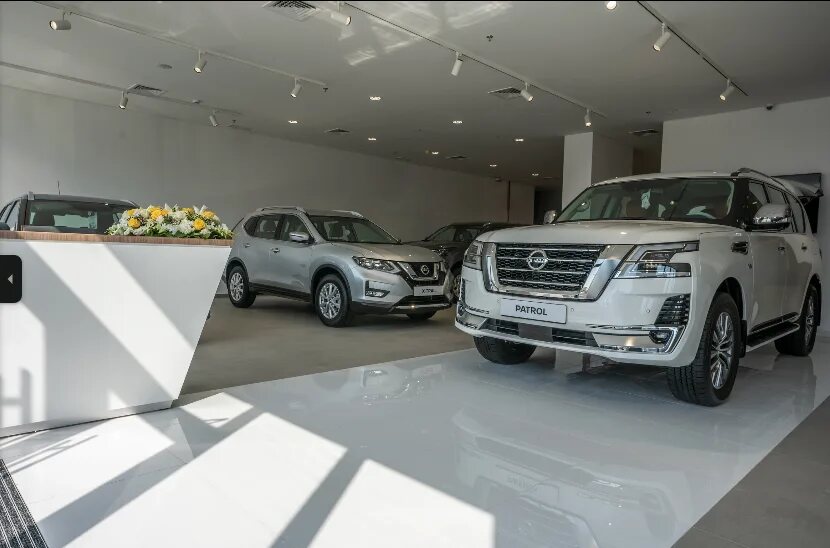
Retail layouts move every season. Track lets spots slide to new positions and be re-aimed in minutes, without new ceiling holes. On the Nissan showroom in Kuwait we supplied 230V track lighting systems, a good fit for a showroom where the cars on display change. For shops where the ceiling itself is a design feature, curved and custom-colour track keeps the system part of the architecture rather than on top of it.
Add controls from the start
A store needs different light at different times: full display light during trading, a lower level for cleaning and restocking, and a night setting for the window. Scenes on a simple panel, with a timeclock, cover most of it. DALI-2 gives individual control of every fitting if you need it later. Planning this at the design stage costs far less than adding it after the ceiling is closed.
A short checklist
- Light the back wall and the entrance first.
- CRI 90 or better, and check R9.
- One colour temperature per zone.
- Low glare fittings for ambient light, accessories on accent spots.
- Track wherever displays will move.
- Scenes for trading, cleaning and night.
Next step
Send us the store layout and the product mix through the contact page, and we will come back with a lighting proposal and the fittings to match.