
Helvar has launched Helvar Senses, a solution that uses the lighting control system to measure indoor conditions as well as occupancy. The reasoning is hard to argue with: lighting sensors are usually the densest sensor network in a building, one in nearly every room, so they are the obvious place to collect data on air quality and comfort.
What Senses measures
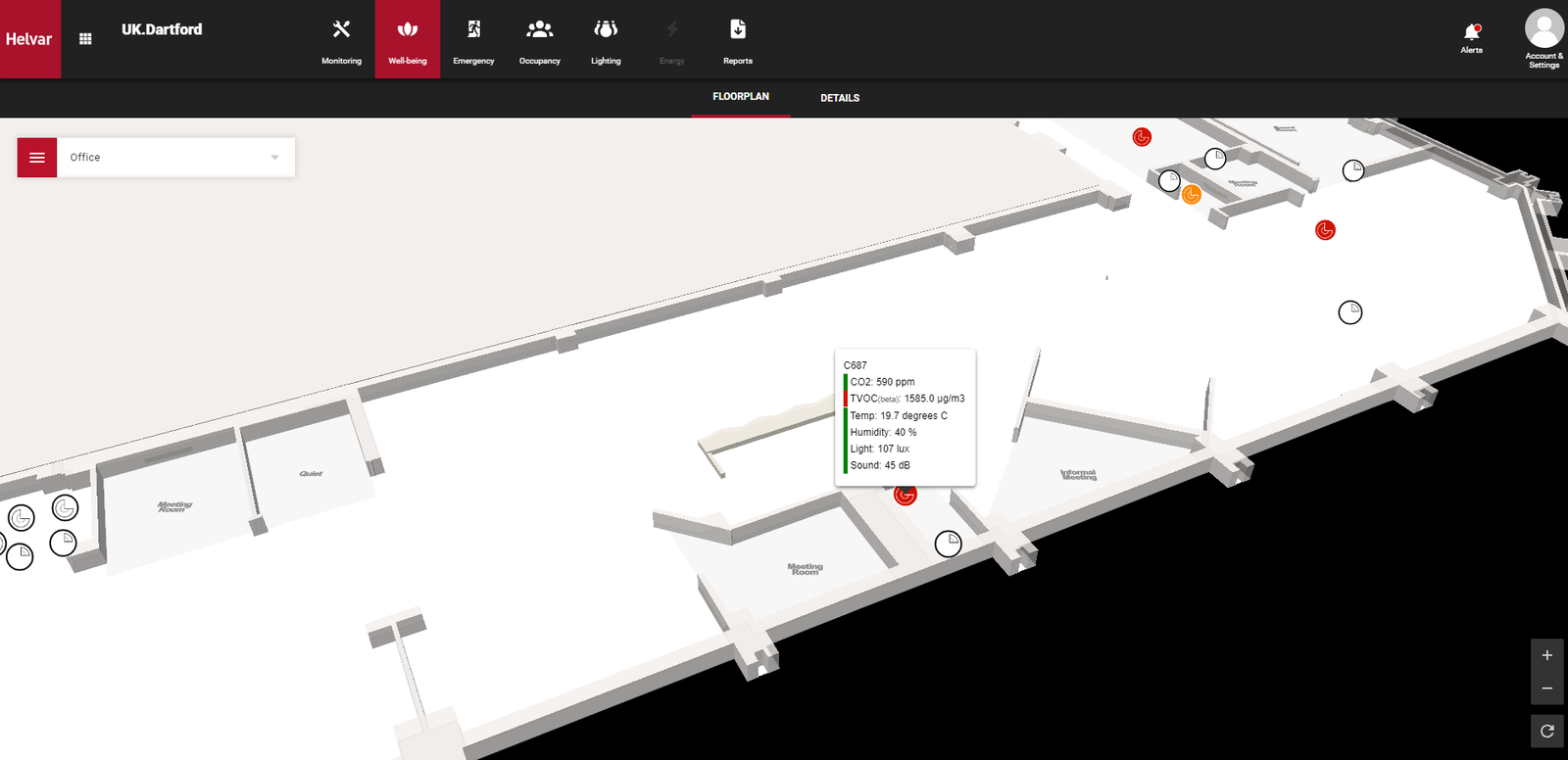
According to Helvar's announcement on 14 November, Senses brings environmental measurements into the lighting system:
- light levels
- CO2 and volatile organic compounds (VOC)
- temperature and humidity
- sound and air pressure
That data is combined with the presence information the lighting sensors already collect, and analysed so building owners and operators can see how spaces are really used and where conditions are poor. Helvar positions it as a step beyond lighting: the lighting control becomes a source of data that other building systems can use.
The problem it targets
Helvar points to a familiar gap. Buildings often use two to five times more energy in operation than was predicted at design stage, largely because the spaces end up being used differently from the original brief. A meeting room planned for six becomes a quiet room for one; an open-plan floor is half empty on most days. Without measured data, the controls keep running the design assumptions.
Senses is meant to close that loop: measure, see where reality differs from the design, and adjust. Helvar also links it to sustainability reporting such as the EU's Corporate Sustainability Reporting Directive, where owners need numbers, not estimates. And it highlights indoor air quality, which the World Health Organization ranks among the biggest environmental risks to health.
What it means for projects here
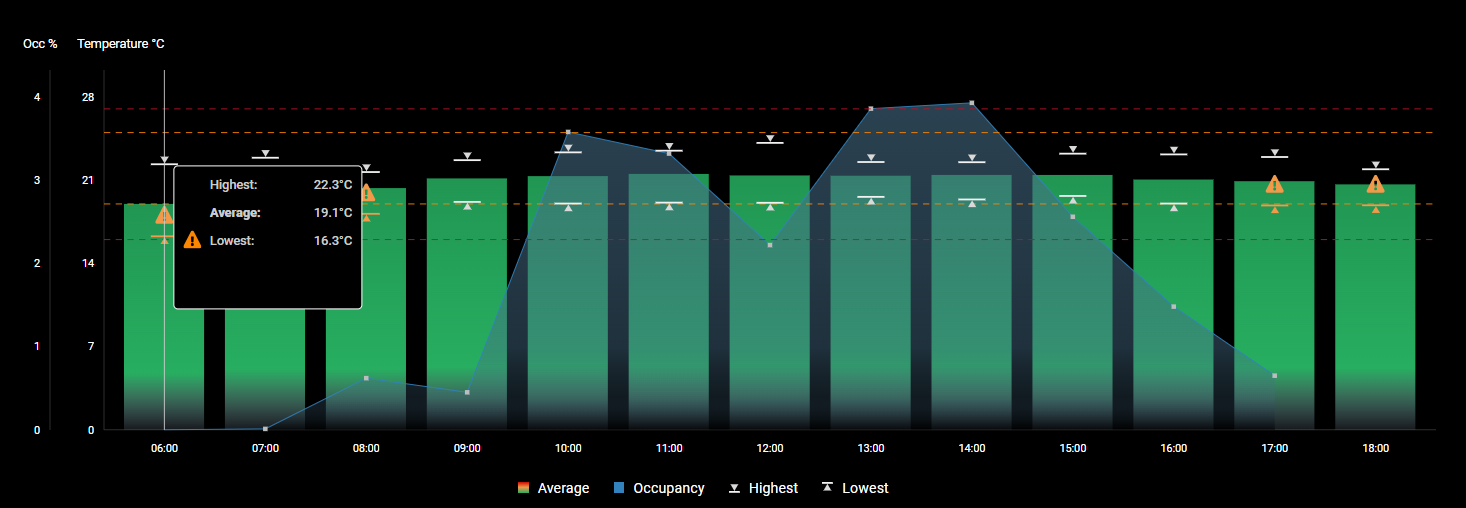
In the Gulf the biggest single load in most commercial buildings is cooling, not lighting, so data on how spaces are occupied and how the air behaves is worth more than the lighting savings alone. A meeting room that is cooled all afternoon for nobody, or one that gets stuffy because twelve people are in a room planned for six, shows up in the numbers.
The practical point for consultants is timing. If environmental sensing is wanted, it should be decided when the lighting control system is designed, not added later, because it changes which sensors go into the ceiling and how the system connects to the BMS.
Find out more
Helvar's Senses page explains the solution in detail. We design, supply and commission Helvar systems in the UAE; see how we approach it on our controls showcase, browse Helvar controls, or talk to us about adding sensing to a project.