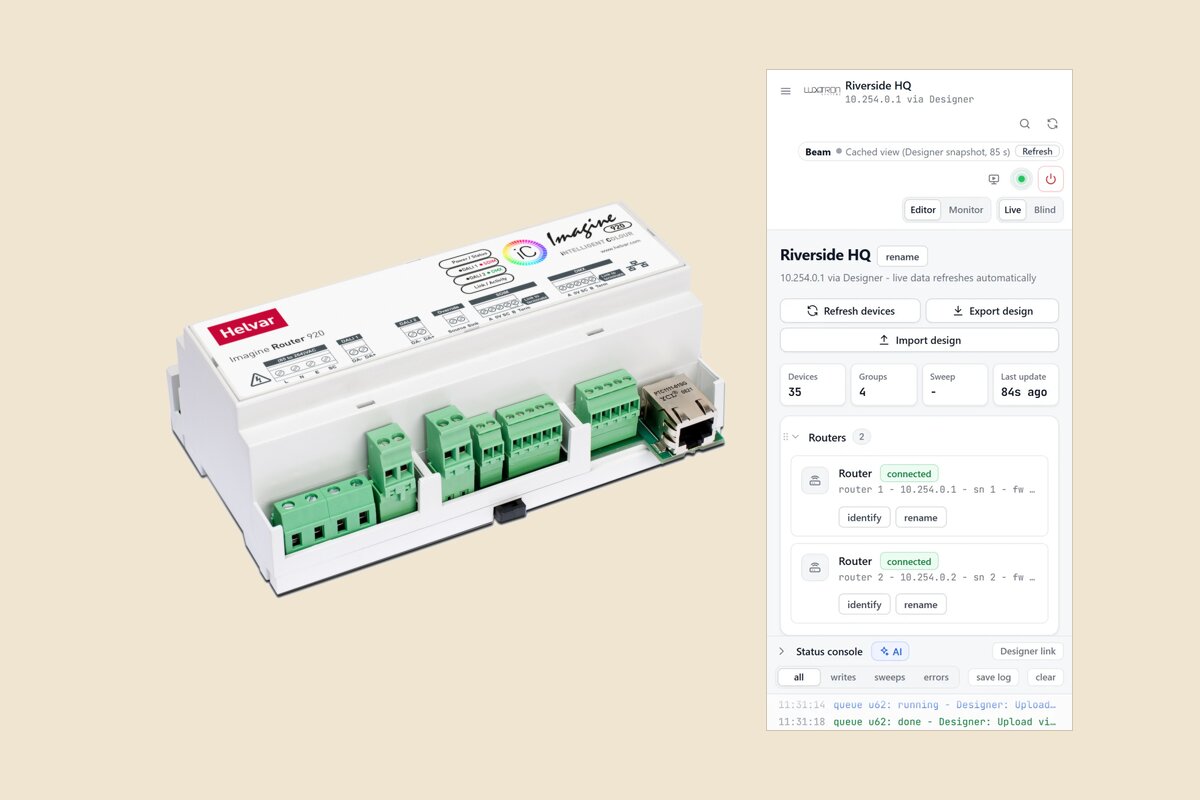
Our line on the home page is "Components, controls, integration. We know every layer." The newest layer is software. Since 2025 Luxtron has been bringing AI into the lighting systems we build, starting with three products for Helvar sites: BeamUI, BeamWatch and BeamEdge. This post is about why we went there and what it looks like today.
Each step built on the last
Luxtron began in 2009 selling Helvar ballasts, A.A.G. Stucchi lampholders and Almeco reflectors. From 2013 we supplied complete CKD kits, putting COBs, holders, heat sinks and reflectors together. When the market moved fully to LED, we moved into fixtures. In 2021 we started supplying lighting controls, growing that work project by project.
Every step used what the previous one taught us. Knowing drivers made us better at fixtures. Knowing fixtures made us better at commissioning controls. And commissioning controls showed us where the tools were slowing everyone down, which is where the software came from.
What runs today
The three products split the job between them:
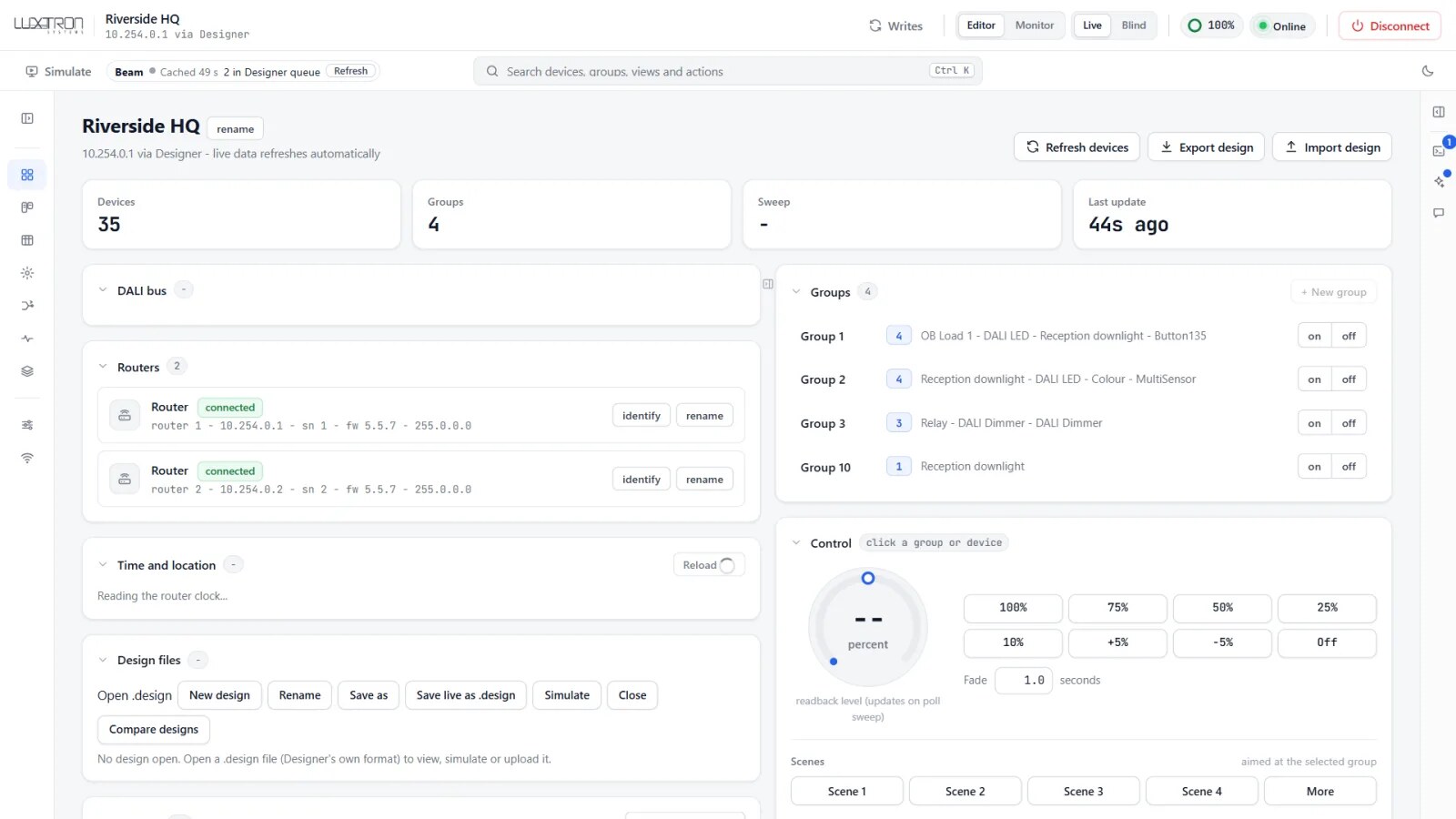
- BeamUI commissions Helvar systems from a browser on a laptop, tablet or phone. Engineers group, name, configure and identify devices on site, and every change is written, read back and logged. It works with your own Helvar Designer installation, so the design file stays the source of truth.
- BeamWatch watches every router around the clock: live status per subnet, usage and an energy estimate, failure history, anomalies such as lights left on overnight, and a weekly site health report.
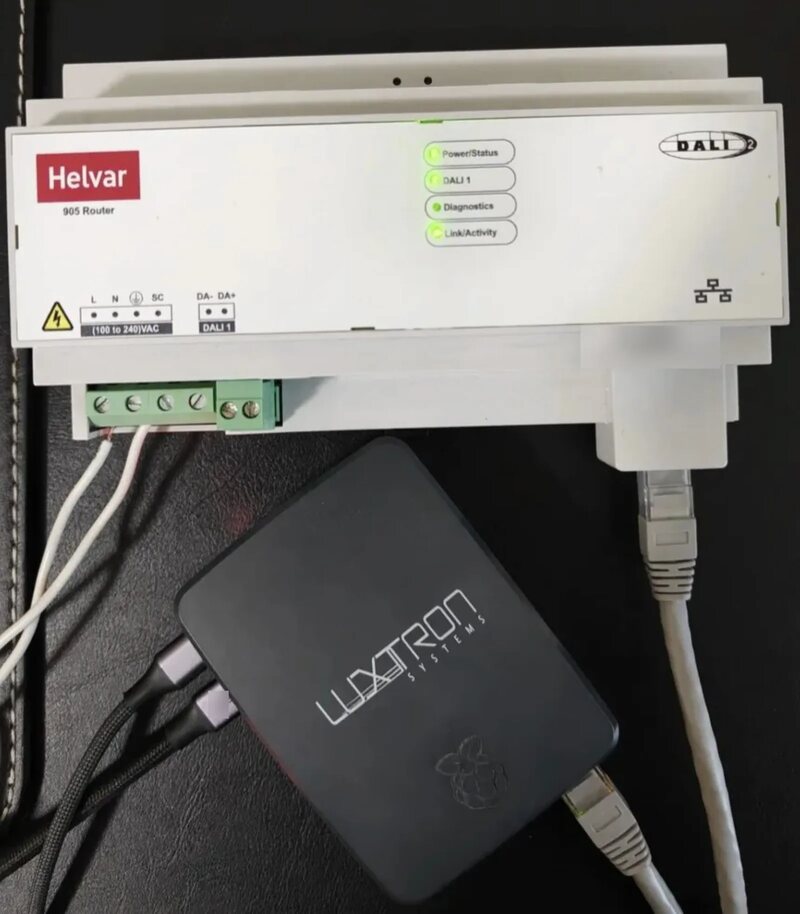
- BeamEdge is the small Linux unit on site that runs it all, keeps the history locally and gives the building management system clean lighting data over BACnet/IP and MQTT.
Where the AI fits
AI in these products drafts, it does not decide. Today it writes a plain-language summary in the weekly health report. Next, in BeamUI, it will turn a brief like "put these two fittings into the lobby group and set their minimum level" into a set of changes, shown as a before and after, which only run once a person approves the whole plan. A fault explainer that reads the diagnostics and suggests the likely cause and next check is also in build.
The rules we build by
- Read-only by default. Monitoring never writes to the lighting. Control is a separate, opt-in step with an allow-list.
- A person approves. AI proposes plans. Nothing changes on site until someone signs off the whole plan.
- Offline first. Everything runs on site. The optional AI features are the only thing that calls out, and they can use a local model instead.
- Honest numbers. Helvar routers do not report measured power per fitting, so the energy figure is labelled as an estimate.
What it means for a project
For a client, the practical result is a lighting system that can be checked and explained after handover, not just on the day it was commissioned. For us, it closes the loop: the same team that picks the driver can see, months later, how that driver is doing in the building.
Next step
The full detail, including the roadmap, is on our intelligence showcase. Read how we got here on the history page, or ask about a Helvar site through the contact page.