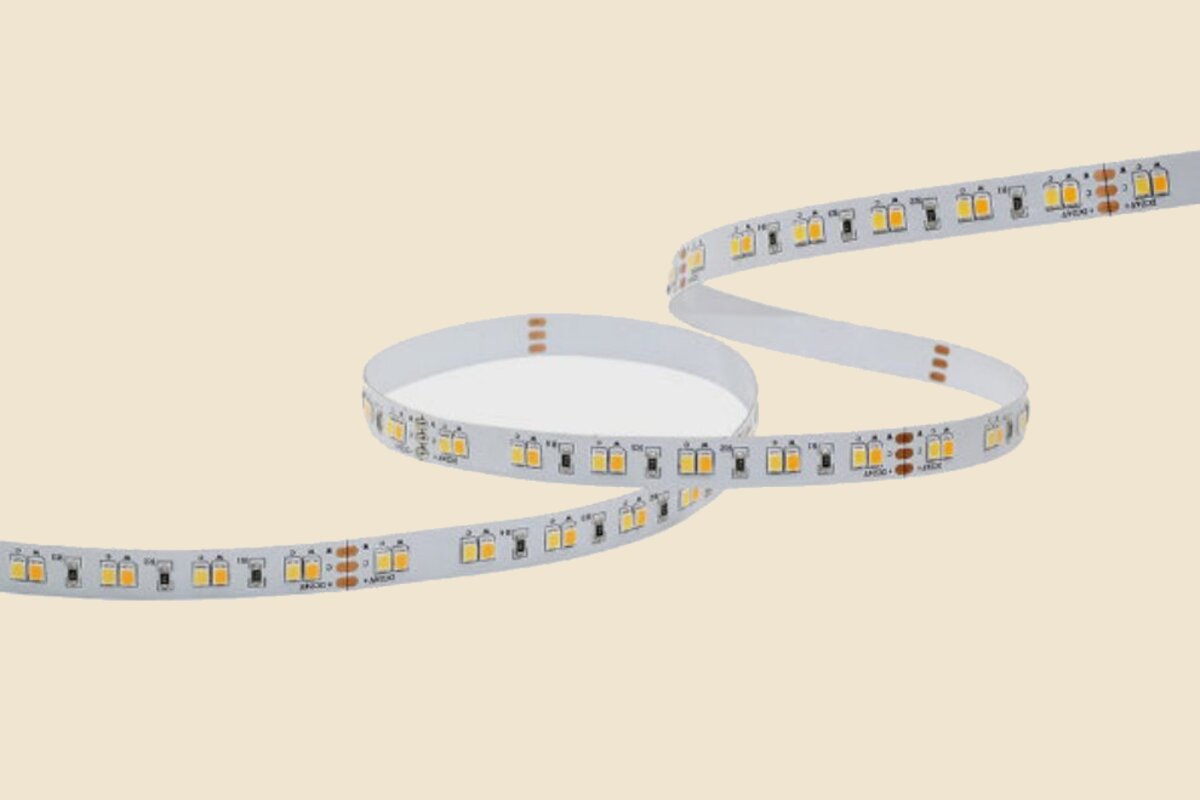
Colour temperature sets the mood of a space before anyone notices the fittings. In this region most interior projects land on 3000 K, with 2700 K for hospitality and homes and 4000 K for work and technical spaces. The choice is rarely about efficiency, because the difference is small, and almost always about how the space should feel at the time of day it is used.
What the numbers mean
Correlated colour temperature (CCT) is measured in kelvin. Lower numbers are warmer and more amber, higher numbers cooler and bluer. For interiors, the useful range is narrow:
- 2700 K: warm, close to a classic incandescent lamp. Relaxed and intimate.
- 3000 K: warm white, close to halogen. Still welcoming but crisper, and the safe default for mixed-use spaces.
- 3500 K: neutral-warm, a common compromise in retail and offices.
- 4000 K: neutral white. Alert, clean and functional.
Strips and decorative products go further either way: Luxtron's Neon.flex is offered from 2200 K to 6500 K, but those extremes are for effect lighting, not general light.
By space
| Space | Usual choice | Why |
|---|---|---|
| Restaurants, bars, lounges | 2700 K | Flattering on skin and food, works at low levels |
| Hotel rooms, residential | 2700 K to 3000 K | Evening use, relaxed |
| Fashion and lifestyle retail | 3000 K | Warm but accurate on fabrics |
| Offices, meeting rooms | 3000 K to 4000 K | Daytime work, depends on culture and daylight |
| Showrooms with cool materials | 3000 K or 4000 K | Steel, glass and white surfaces look clean |
| Gyms, back of house, car parks | 4000 K | Alert, functional |

Warmer costs a little light
Warmer LEDs are slightly less efficient. Stucchi's published figures show how small the gap is:
| Fixture | 2700 K | 3000 K | 4000 K |
|---|---|---|---|
| Clic Spot F41 EVO, 18° lens | 707 lm | 730 lm | 734 lm |
| Senzafine EVO HE Opal 1021 mm, CRI 90 | 125.9 lm/W | 129.6 lm/W | 132.5 lm/W |
A 3 % to 5 % difference rarely decides anything. Pick the CCT for the space, then adjust quantities if needed.
Rules that avoid problems
- One CCT per space. Mixing 3000 K downlights with 4000 K coves looks like a mistake, because it is one.
- Match across products. Strips, spots and linears from different makers can drift even at the same nominal CCT. Ask for colour consistency in MacAdam steps.
- Think about daylight. Spaces with big windows often look better at 3500 K to 4000 K during the day.
- Consider the finishes. Warm timber and brass suit 2700 K to 3000 K. Marble, white and steel can look yellow at 2700 K.
When tunable white earns its place
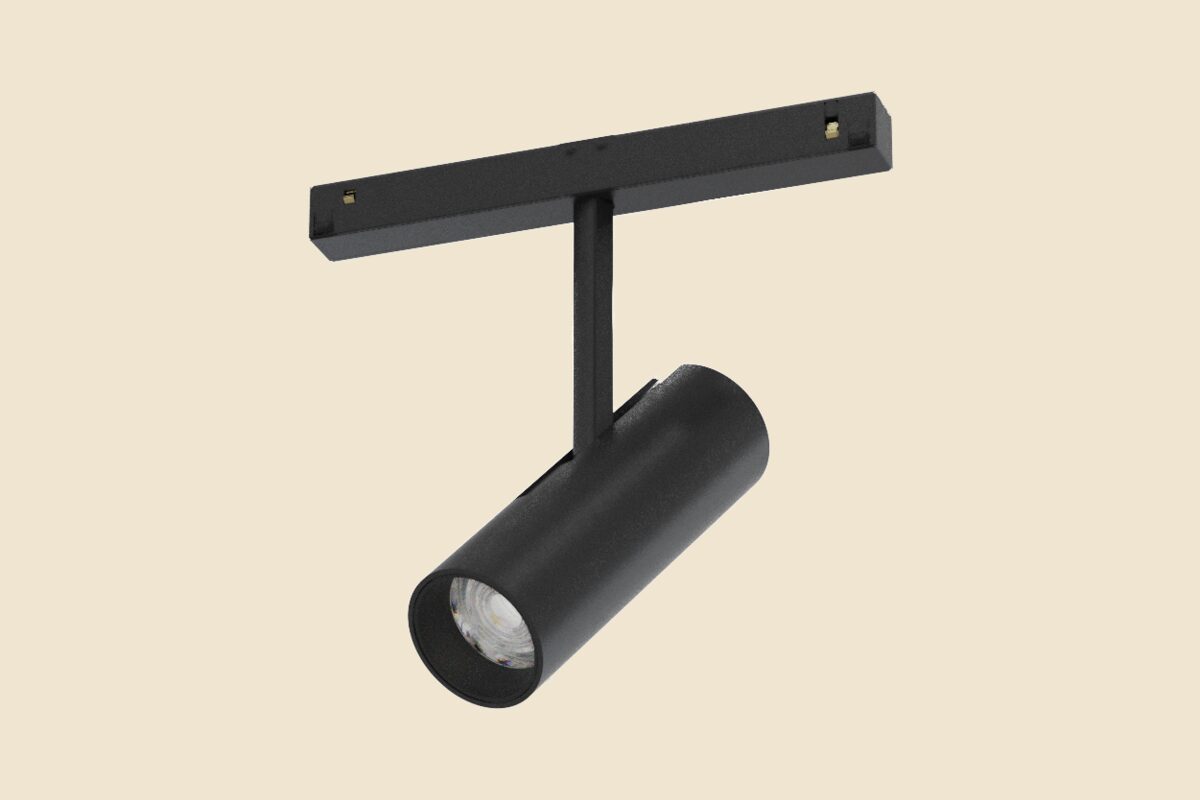
Tunable white lets one installation run cooler by day and warmer in the evening, which suits offices with long hours, hotel rooms and multi-use spaces. It needs two-channel products, such as Helvar's iC drivers with DALI DT8, and a control system to drive it. It is not worth it where the space is used for one thing at one time of day.
For fixtures with clear CCT options, see our Clic Spot F41 EVO and the wider track fixture range, or talk to us about a scheme.