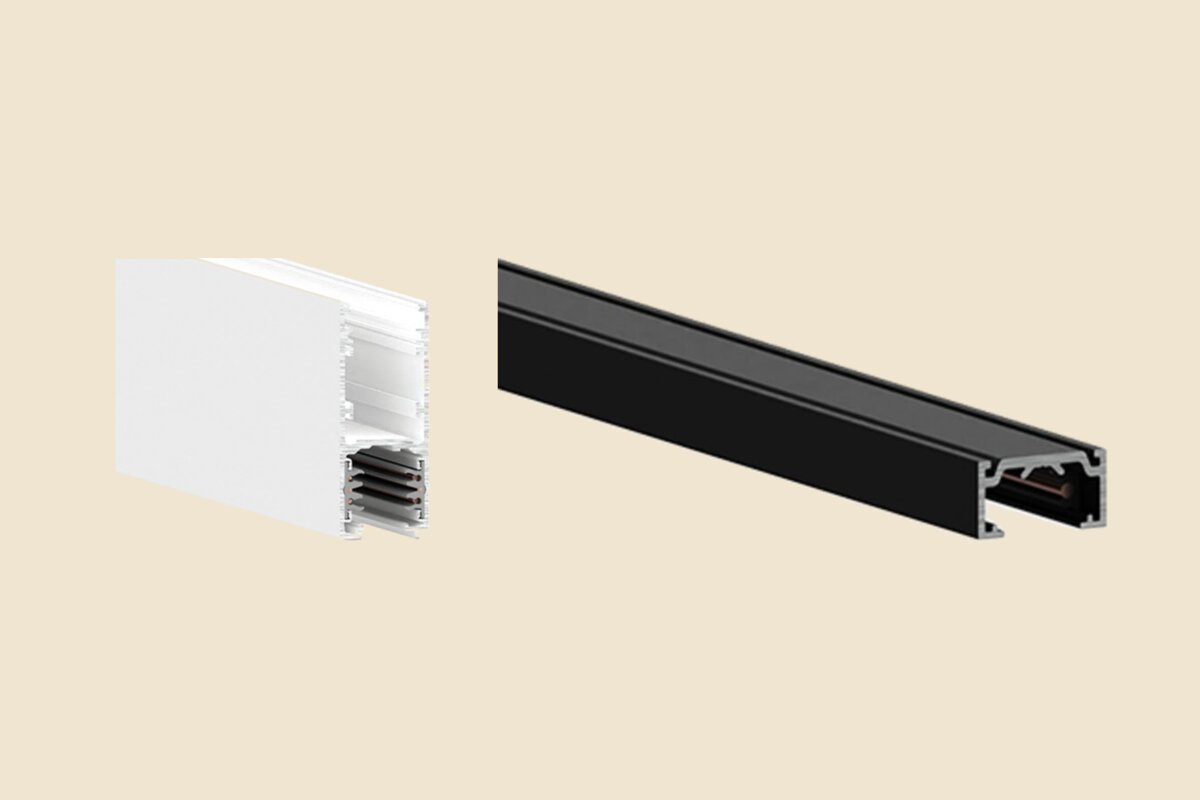
Pick 230 V track when you need long runs, heavy loads or several switched circuits on one line. Pick 48 V track when the fixtures should be as small as possible and the loads per run are moderate. The rest of this guide shows why, using the ratings of two systems we supply: Stucchi ONETRACK at 230 V and Stucchi EVO at 48 V.
The numbers side by side
| ONETRACK (9000) | EVO (9500) | |
|---|---|---|
| Supply | 230 V three-phase | 48 V dc via a SELV driver |
| Track rating | 16 A / 440 V | 15 A / 60 V dc |
| Circuits and data | 3 circuits plus a data pair (1 A / 50 V FELV) | 48 V dc supply; control options chosen per fixture |
| Stated load | 3.6 kVA per phase, 10.8 kVA total | 100 W per box driver |
| Track lengths | 1000 to 4000 mm | 1000 to 3000 mm |
| Max mechanical load | 25 kg/m | 25 kg/m |
The mechanical side is the same. The electrical side is not, and that is where the decision lives.
Why voltage matters: current and voltage drop
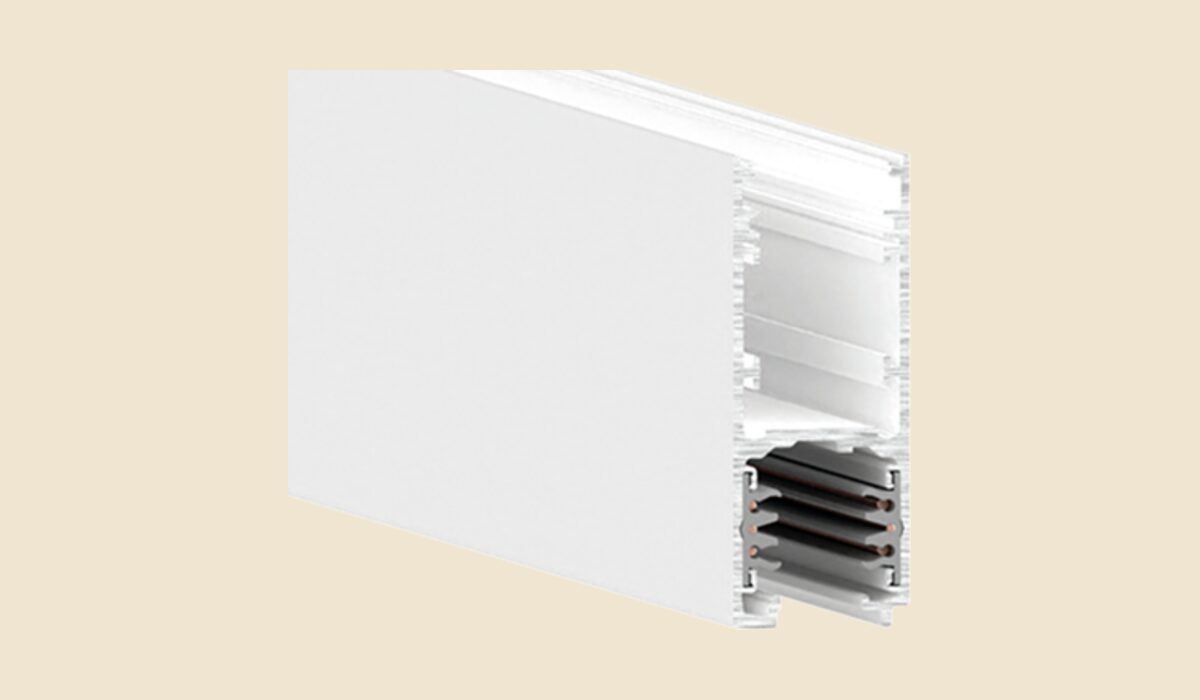
Power is voltage times current. To deliver the same wattage at 48 V, a track has to carry nearly five times the current it would at 230 V. Higher current means more voltage drop along the conductors, so low-voltage runs are planned around where the feeds sit and how much each driver can supply. EVO's 15 A rating is 720 W at 48 V; ONETRACK's 16 A is 3.6 kVA on each of three phases. In practice a 48 V run is fed more often and loaded more carefully.
Why 48 V wins on fixture size
On 230 V track, every fixture has to convert mains to LED current somewhere, in the head, in the adapter or in a driver housing. On 48 V track the conversion happens once, at the feed. That is how the Clic Spot F41 EVO gets down to a 41 mm diameter. The driver also makes the track side SELV (safety extra-low voltage), separated from the mains.
Efficiency is not the deciding factor. Stucchi's Senzafine HE linear module gives 2227 lm from 18.7 W at 1128 mm in its 230 V version, and 2204 lm from 17 W at 1021 mm in its 48 V EVO version. Both sit around 119 to 130 lm/W. Choose on the system, not on lumens per watt.
Circuits and control
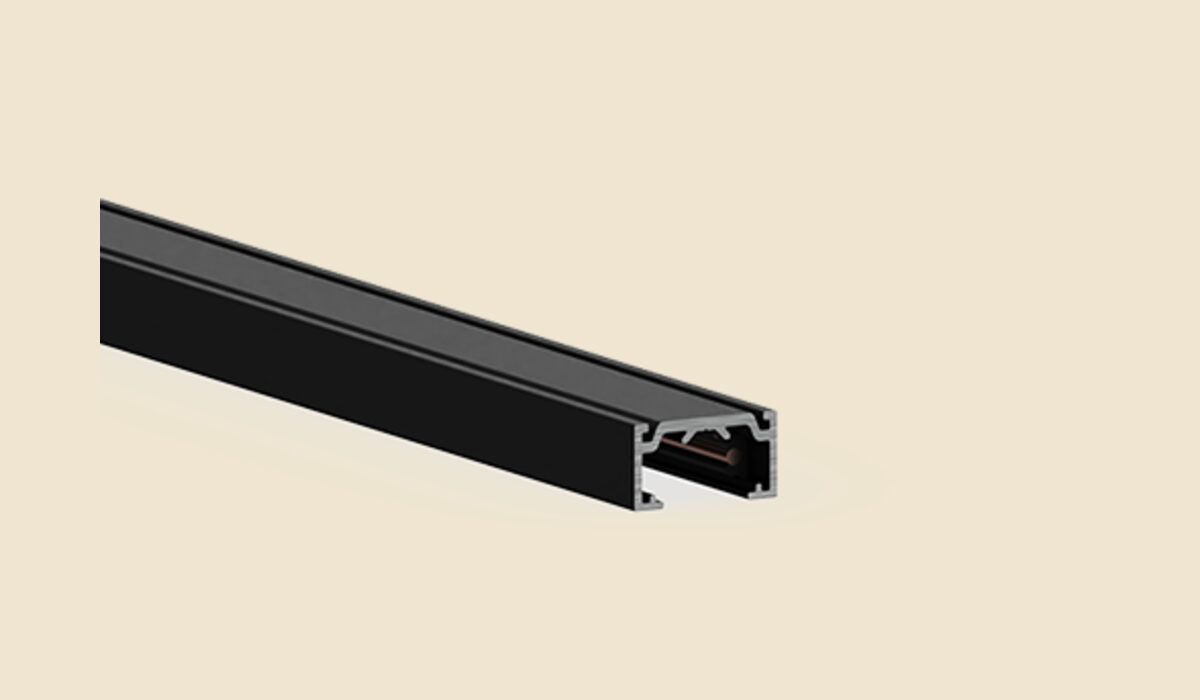
ONETRACK gives you three separately switched circuits and a data pair for addressable control, all in one profile. That suits shops and galleries where display light, general light and a night circuit share the same line. On EVO, control is chosen at the fixture: the Clic Spot F41 EVO and Senzafine EVO HE are listed in on-off, 0-10 V and DALI-2 versions. If you need emergency lighting on the same line, Stucchi's HYPER two-sector track puts an emergency sector above a 230 V three-phase sector with data bus.
A quick decision list
- Long runs, high wattage, warehouse-scale retail: 230 V ONETRACK.
- Several switched groups on one track: 230 V ONETRACK.
- Small spots, slim linear light, low ceilings, residential or hospitality: 48 V EVO, or MICRO and Core for even slimmer profiles.
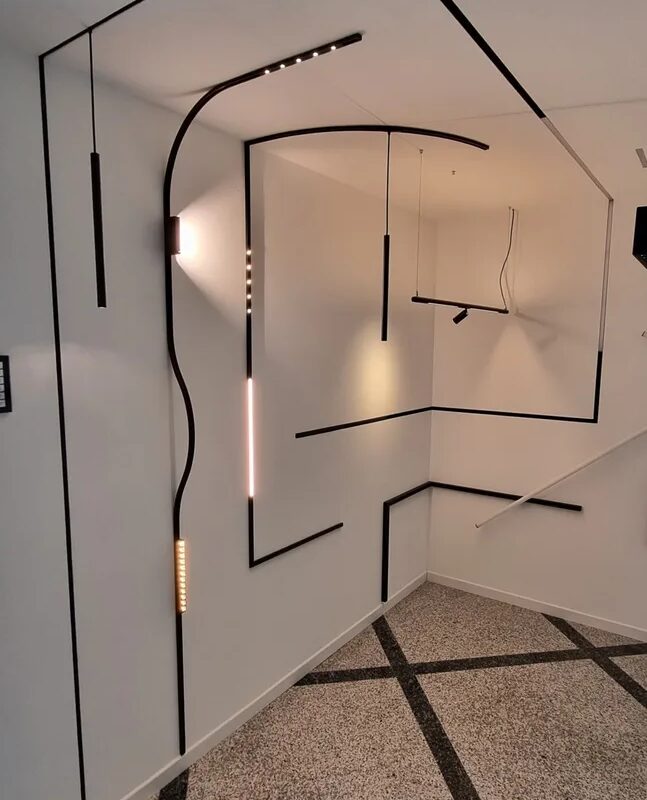
- Curved runs: both systems offer curved sections; check the minimum radius early.
- No space for a driver near the ceiling: 230 V, since every 48 V feed needs its own 48 V supply, such as the 100 W box driver.
What we need to recommend one
Send us the ceiling plan, the fixture schedule with wattages, the control method and where power is available. We will run the load per feed and tell you which system fits. Browse ONETRACK and EVO, or get in touch.